
Construction Loans: How They Work and How to Get One
Last updated: 11 May 2026 · Reading time: 8 minutes
Building a home is one of the largest financial decisions you’ll make. A construction loan is specifically designed for the job — it releases funds in stages as your build progresses, so you only pay interest on the money that’s been drawn down, not the full loan amount from day one.
This guide explains exactly how construction loans work in Australia, what you need to qualify, what documents to prepare, and how to navigate the process from pre-approval to handover.
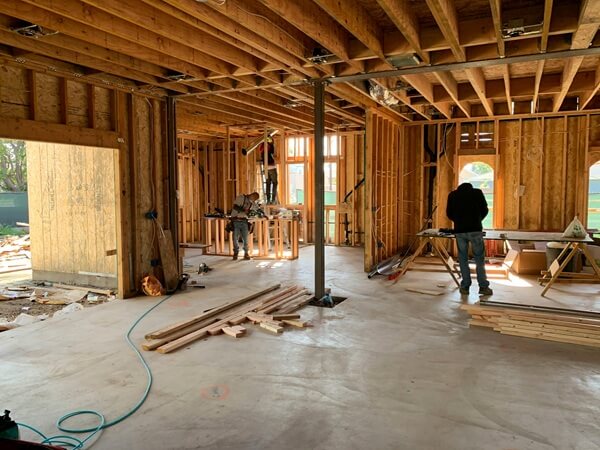
What Is a Construction Loan?
A construction loan (also called a building loan or progressive drawdown loan) is a home loan structured around the stages of a build rather than a single lump-sum settlement.
Instead of receiving the full loan amount upfront, your lender releases funds progressively — in a series of payments called progress drawdowns — tied to specific milestones in your construction. Your builder submits an invoice at the end of each stage; you (or your broker) approve it; the lender pays the builder directly.
The key advantage: during construction, you only pay interest on the amount that has actually been drawn down. If your total loan is $600,000 but only $120,000 has been released to cover the slab and frame, you’re paying interest on $120,000 — not $600,000.
Once construction is complete and the final drawdown is made, the loan typically converts to a standard principal-and-interest home loan for the remainder of the term.
Construction Loan vs Standard Home Loan: Key Differences
| Feature | Construction Loan | Standard Home Loan |
|---|---|---|
| Funds released | In stages (progress drawdowns) | Lump sum at settlement |
| Interest during build | Interest-only on drawn amount | Interest on full balance from day one |
| Repayments during build | Lower — interest only | Full principal & interest |
| Security | Land value + on-completion valuation | Existing property |
| Loan term | Typically converts to 25–30 year P&I after build | 25–30 years from settlement |
| LVR basis | Assessed on lesser of: land + construction cost OR on-completion value | Assessed on purchase price or valuation |
| Documentation required | Standard docs PLUS fixed-price building contract, council-approved plans, builder’s insurance | Standard home loan docs |
| Timeframe to complete | Typically must complete within 24 months of first drawdown | Not applicable |
When Do You Need a Construction Loan?
Construction finance applies to a broader set of scenarios than many borrowers realise:
- Building on land you already own — you have a vacant block and a builder ready to go
- House and land packages — buying land and constructing a new home under a fixed-price building contract
- Off-the-plan construction — purchasing a property before it is built (some lenders treat this differently; ask your broker)
- Knock down rebuild — demolishing your existing home and constructing a new one on the same land (see our knock down rebuild guide)
- Owner builder — you are acting as your own general contractor (specialist lenders only; additional conditions apply)
- Major renovation or extension — works significant enough that the lender treats them as a construction project
Six Stages of Construction and How Drawdowns Work
Most Australian lenders structure construction drawdowns across five or six stages. The exact percentages vary by lender and builder, but the following gives a reliable guide for a standard single-storey residential build.
| Stage | What’s Completed | Approx. % of Build Cost |
|---|---|---|
| 1. Site preparation / base | Soil testing, site levelling, clearing, footings poured, under-slab drainage, moisture barrier, termite protection mesh | 10–15% |
| 2. Frame | Wall frames, roof frame and sheeting, gutters, conduit for electrical and plumbing, insulation | 15–20% |
| 3. Lock-up | External walls, windows, doors, roofing complete — property can be locked | 15–20% |
| 4. Fit-out / fixing | Internal plumbing, electrical fittings (lights, powerpoints), cabinets, tiling, cornices, architraves, reveals | 25–30% |
| 5. Practical completion | Painting, final fixtures, site clean-up, fencing — property is ready to occupy | 10–15% |
| Retention | Small amount held back until defects period clears (practice varies by builder contract) | ~5% |
How each drawdown works:
- Your builder completes a stage and issues a progress claim invoice.
- You sign off on the invoice (it’s worth doing a walkthrough first).
- You or your broker submit the drawdown request and invoice to the lender.
- The lender may conduct a progress inspection/valuation before releasing funds.
- Funds are paid directly to your builder — typically within five business days.
- Your interest repayment increases slightly as each new amount is drawn.
Eligibility and Deposit Requirements
How much deposit do you need?
Most lenders require a minimum 5% to 20% deposit for a construction loan, depending on your situation:
- 20% deposit (80% LVR): No Lenders Mortgage Insurance (LMI) required
- 10% deposit (90% LVR): LMI generally applies unless you qualify for a waiver
- 5% deposit (95% LVR): Available to eligible borrowers, usually with LMI or via the federal First Home Guarantee
Important for professionals: Eligible borrowers in certain professions — including doctors, dentists, lawyers, accountants, engineers, nurses and others — may qualify to borrow up to 90% with no LMI, saving $15,000–$30,000+ in upfront costs. Professional Home Loans specialises in arranging these waivers. See which professions qualify here.
General eligibility criteria
Lenders assess construction loan applications against the following:
- Credit history: A clean or explainable credit file
- Income: Stable, verifiable income sufficient to service repayments on the full loan amount (lenders assess your ability to repay the full loan, even though drawdowns are progressive)
- Deposit or equity: As above — 5% minimum in most cases; some lenders allow existing land equity as the deposit
- Fixed-price building contract: From a registered, licensed builder
- Council-approved plans and specifications
- Builder’s insurances: Including Home Warranty Insurance (also called Domestic Building Insurance), Builders All Risk insurance, and Public Liability insurance
- Realistic build timeline: Most lenders require construction to commence within 12 months of loan approval and be completed within 24 months of the first drawdown
Document and Application Checklist
Standard home loan documents (all borrowers)
Proof of identity (passport, driver’s licence)
Last two payslips and most recent group certificate / tax return (PAYG)
Last two years’ tax returns and financials (self-employed)
Three months’ bank statements
Evidence of deposit / genuine savings
Existing loan statements (if any)
Construction-specific documents
Fixed-price building contract (signed by you and a registered builder)
Council-approved plans and specifications
Progress payment schedule (usually included in building contract)
Builder’s Home Warranty Insurance certificate
Builder’s Public Liability Insurance certificate
Builder’s licence number (verify via your state’s licensing authority)
If applicable: council development approval (DA) or building approval (BA)
Quotes for any work outside the main contract (pool, shed, landscaping, etc.)
For owner builders (additional)
Owner builder permit from your state licensing body
Quantity surveyor’s report (many lenders require this)
Evidence of relevant trade qualifications or experience
Broker tip: The single biggest cause of construction loan delays is incomplete or inconsistent documentation. Getting your builder’s contract and council approvals finalised before lodging your application will save weeks of back-and-forth.
How to Apply: Step-by-Step Process
Step 1: Get your finances in order Review your income, existing debts and savings. Use a borrowing power calculator to estimate your capacity. If you’re a professional eligible for an LMI waiver, confirm this with your broker before approaching lenders.
Step 2: Engage a broker A mortgage broker who specialises in construction finance will assess your position across multiple lenders — not just one bank. This matters because construction loan policies, acceptable builder types, and LVR caps vary significantly between lenders.
Step 3: Obtain pre-approval Submit your financial documents and get conditional approval before you sign a building contract. Pre-approval confirms your budget, gives you negotiating confidence with builders, and flags any issues early.
Step 4: Engage your builder and finalise plans Select a registered, licensed builder. Obtain your fixed-price building contract, progress payment schedule, council-approved plans, and builder’s insurances.
Step 5: Submit formal (full) loan application Your broker submits the complete application — including all construction-specific documents. The lender orders a valuation based on the on-completion value of the property.
Step 6: Loan approval and signing The lender issues a formal approval and loan documents. You sign and return them. Construction may now commence.
Step 7: Progress drawdowns As each build stage is completed, your builder invoices you. You (or your broker) submit drawdown requests to the lender. The lender inspects and pays your builder directly.
Step 8: Final inspection and loan conversion Once practical completion is reached and the final drawdown is made, the loan converts from interest-only to principal-and-interest. You receive your keys.
Government Grants and Schemes for New Builds
Building a new home opens up access to government support that isn’t available when buying an established property.
First Home Owner Grant (FHOG)
A one-off, tax-free payment for eligible first-home buyers purchasing or building a new home. Amounts vary by state and territory:
| State / Territory | FHOG Amount (2025–26) | Property Value Cap |
|---|---|---|
| NSW | $10,000 | $600,000 (new builds) |
| VIC | $10,000 | $750,000 |
| QLD | $30,000 | $750,000 |
| SA | Up to $15,000 | $575,000 |
| WA | $10,000 | $750,000 |
| TAS | $30,000 | No cap (confirm with SRO) |
| NT | $50,000 | — |
| ACT | Not available | — |
Amounts and caps are set by each state’s Revenue Office and are subject to change. Always verify current figures with the relevant state Revenue Office before applying.
First Home Guarantee (First Home Buyer Guarantee)
Administered by Housing Australia, this federal scheme allows eligible first-home buyers to purchase or build with as little as a 5% deposit without paying LMI. The government guarantees up to 15% of the loan, reducing the lender’s risk. Income caps and property price thresholds apply.
First Home Super Saver Scheme (FHSSS)
Allows first-home buyers to make voluntary superannuation contributions of up to $15,000 per year and withdraw up to $50,000 (total) for a home deposit. Withdrawals are taxed at a lower rate than regular income.
The FHOG can generally be applied at the time of your first construction drawdown — not at land settlement. Your broker or lender can lodge the application on your behalf.
Construction Loans for Professionals: No LMI Up to 90%
Professional Home Loans specialises in finance for doctors, specialists, lawyers, accountants, engineers, nurses and other professionals. Many lenders will waive LMI entirely for eligible professionals borrowing up to 90% LVR — a saving of $15,000 to $30,000+ on a typical construction loan.
This applies to construction loans too, not just purchases of established properties.
If you’re in a qualifying profession, this is worth exploring before you assume you need a 20% deposit. See profession-specific loan options or speak to us directly.
Related guides:
Common Mistakes to Avoid
Signing a building contract before getting pre-approved. If the lender values the completed property at less than land + construction cost, you may have a funding gap — and you’re already contractually committed to your builder.
Choosing an unregistered builder. Almost all lenders will decline a construction loan if your builder is not licensed and registered in your state. Verify the licence number via your state’s building authority before signing anything.
Not budgeting for cost overruns. A fixed-price contract protects you from most variations, but allowances for site conditions, soil testing surprises, and council requirements can add up. Many brokers recommend keeping a 10% contingency.
Making too many contract variations. Each variation your builder raises may require the lender to re-assess your loan. Some lenders will restart the process if the contract price changes by even a small amount.
Not factoring in rent during the build. If you’re not living on-site (you won’t be), you’ll be paying both rent and interest on drawn-down funds simultaneously. Budget for this from the start.
Why Use a Mortgage Broker for Your Construction Loan?
Construction loans are more complex than standard home purchases. Policies vary significantly between lenders — on acceptable builder types, LVR limits, drawdown processes, and owner builder conditions. A lender that’s excellent for a standard home purchase may have a poorly structured construction loan department that causes delays and errors.
A specialist mortgage broker:
- Matches you to the lender with the right construction loan policy for your specific build type
- Manages the drawdown process with the lender’s construction team on your behalf
- Identifies LMI waiver opportunities if you’re in an eligible profession
- Helps you avoid contract variation traps that can trigger re-assessments
- Co-ordinates between your builder, conveyancer and lender
Professional Home Loans has helped clients across Australia finance new builds, house and land packages, knock down rebuilds, and investment construction projects. Our service is free — we are paid by the lender, not by you. There is no cost and no obligation to enquire.
Book a free strategy session or call 1300 55 44 97.

About the Author: Tom Luu
Tom Luu is a specialist mortgage broker and the founder of Professional Home Loans. With over 9 years of experience in the Australian mortgage industry, Tom specializes in complex lending scenarios, particularly for medical professionals, expats, and temporary visa holders. He is dedicated to helping clients navigate the nuances of Australian credit policies to secure the best possible financial outcomes.
Experience: 9+ Years in Mortgage Broking
Credentials: Credit Representative Number 486574
Expertise: Visa Home Loans, Professional LMI Waivers, and Expat Finance.
Free 30-Minute Finance Strategy Session For Professionals
Let us help guide you through the Home loan process.
FAQs Construction Loan
What is a construction loan and how does it work in Australia? A construction loan is a home loan that releases funds in stages — called progress drawdowns — as your home is built. Rather than receiving the full loan amount at settlement (as with a standard home loan), the lender pays your builder at the completion of each build stage. During construction, you pay interest only on the amount that has been drawn down, which keeps your repayments lower while the build is underway. Once construction is complete, the loan typically converts to a standard principal-and-interest loan.
How much deposit do I need for a construction loan? The minimum deposit for most construction loans in Australia is 5%, though 10–20% is more common without government assistance. If you deposit less than 20% (i.e., your Loan-to-Value Ratio exceeds 80%), Lenders Mortgage Insurance (LMI) will generally apply unless you qualify for a professional LMI waiver or use the federal First Home Guarantee. The exact amount required depends on the lender, your income, your profession, and whether you’re buying land separately or as part of a house and land package.
Can I use a construction loan for a house and land package? Yes. A house and land package involves two contracts: one for the land purchase and one with your builder for construction. The land settlement typically occurs first (using a standard home loan or land loan), and the construction loan then funds the build in stages. Some lenders can combine both into a single construction loan, but this depends on their policy and timing. A broker can help you structure this correctly.
What is the difference between a construction loan and a standard home loan? A standard home loan settles in a lump sum and charges interest on the full balance from day one. A construction loan releases funds progressively and charges interest only on what has been drawn down, keeping repayments lower during the build period. Construction loans also require additional documentation — particularly a fixed-price building contract, council-approved plans, and builder’s insurance — which are not required for a standard purchase.
How long does a construction loan last? Most lenders require construction to commence within 12 months of approval and be completed within 24 months of the first drawdown. The overall loan term (after conversion to principal and interest) is typically 25–30 years, the same as a standard home loan.
Can I get a construction loan if I am an owner builder? Yes, but your options are more limited. Most major banks will not lend to owner builders, or they apply significantly tighter conditions — such as requiring a quantity surveyor’s report and capping LVR at 60–70%. Specialist lenders do offer owner builder loans. An experienced mortgage broker is particularly important in this scenario.
Do I pay interest during construction? Yes. During the construction period, your repayments are interest-only, calculated only on the portion of the loan that has been drawn down at any given time. As each new drawdown is made, your interest repayments increase incrementally. This is generally lower than full principal and interest repayments on the entire loan amount.
What happens if my builder goes broke during construction? This is where builder’s Home Warranty Insurance (also called Domestic Building Insurance) is critical. In most states, builders are required by law to take out Home Warranty Insurance for contracts above a certain threshold ($20,000 in most jurisdictions). This insurance provides cover to the homeowner if the builder dies, becomes insolvent, or disappears before completing the work. Your lender will require evidence of this insurance before releasing any drawdowns.
Can I get a construction loan if I am self-employed? Yes. Self-employed borrowers can access construction loans, though lenders typically require the last two years’ tax returns, business financial statements, and ATO notices of assessment to verify income. Some lenders also offer low-doc construction options for self-employed borrowers who cannot fully document their income in the standard way, though these attract higher rates and stricter conditions.
What is the First Home Owner Grant and does it apply to new builds? The First Home Owner Grant (FHOG) is a one-off, tax-free payment from state and territory governments to eligible first-home buyers who are purchasing or building a new home. It does apply to construction — in most states, it is paid at the time of the first progress drawdown (not at land settlement). Amounts vary by state, ranging from $10,000 (NSW, VIC, WA) to $50,000 (NT). The ACT does not offer the grant. Your broker or lender can submit the FHOG application on your behalf.
Can I use equity in existing property as a deposit for a construction loan? Yes. If you already own property with sufficient equity, many lenders will allow you to use that equity as your deposit for a construction loan — either on the same land or a different block. This can eliminate the need for cash savings as a deposit. Your lender will order a valuation of the existing property and assess the available equity against the proposed construction loan amount.
What builder’s insurance does the lender require? Before approving the first drawdown, most lenders require evidence of: (1) Home Warranty Insurance (Domestic Building Insurance) — required by law in most states for contracts over $20,000; (2) Builder’s All Risk insurance — covers damage to the building under construction; and (3) Public Liability insurance — covers third-party injury or property damage. Your builder is responsible for obtaining these, but it’s your responsibility to provide the certificates to your lender.

Getting a home loan was really simple with Professional Home Loans.
“We went overseas during settlement and it was not a problem for them, everything went smoothly and I’m writing this from my new home! “
Jack Clancy
Well done you made it easy with no BS.
“Couldn’t ask for a better job – until next time (although no time soon, moving was awful). “
Accountant, Mick and Vanessa Renton
No LMI for building home in Sydney as well as 90% LVR no lmi for investment proerpty off the plan in Newcastle.
“Professional Home Loans has provided us with a very professional service, communicating all the available options to us and in the process he has literally saved us $75k that we would have otherwise paid. They certainly go beyond the call of duty. “
Hamilton (Accountant) & Nyari (Doctor) Sydney
Working for QLD Health achieved 90% LVR no LMI at normal rates - From UK. Sunshine Coast, QLD
“We were able to get a loan at a good rate and avoid paying LMI which saved us several thousand dollars that we can now put towards other things. Very helpful and informative about all aspects of the process, not just the loan, which we really appreciated as it made the whole thing a lot easier for us.”
Craig and Louise (Medical Registrars)
On a contracting basis – she got paid roughly 70% of what she billed.
“We assisted Arlyn with a 90% Mortgage with No Lenders Mortgage Insurance payable so she could buy a house and land package Thanks so much. All credits goes back to you as you helped me make all this happen. I couldn’t thank you enough for the job excellently done. “